moodflo
moodflo
Year
Year
2025
2025
Industry
Industry
Tech Health
Tech Health
Scope of work
Scope of work
/
Founder • Research • UX • UI • Prototyping • System Architecture • Pilot Strategy
Founder • Research • UX • UI • Prototyping • System Architecture • Pilot Strategy
Timeline
Timeline
6 months
6 months
Problem
Problem
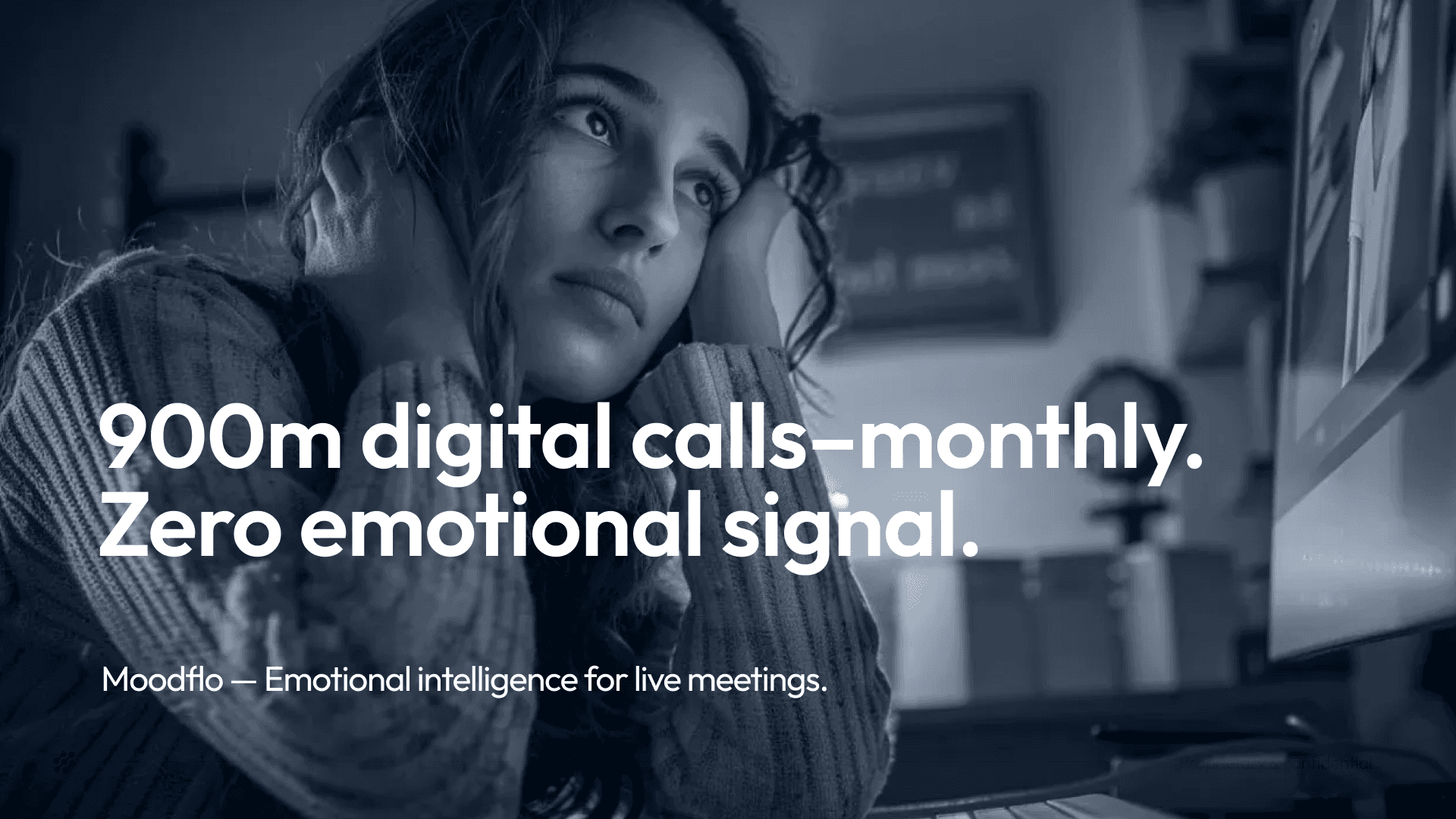
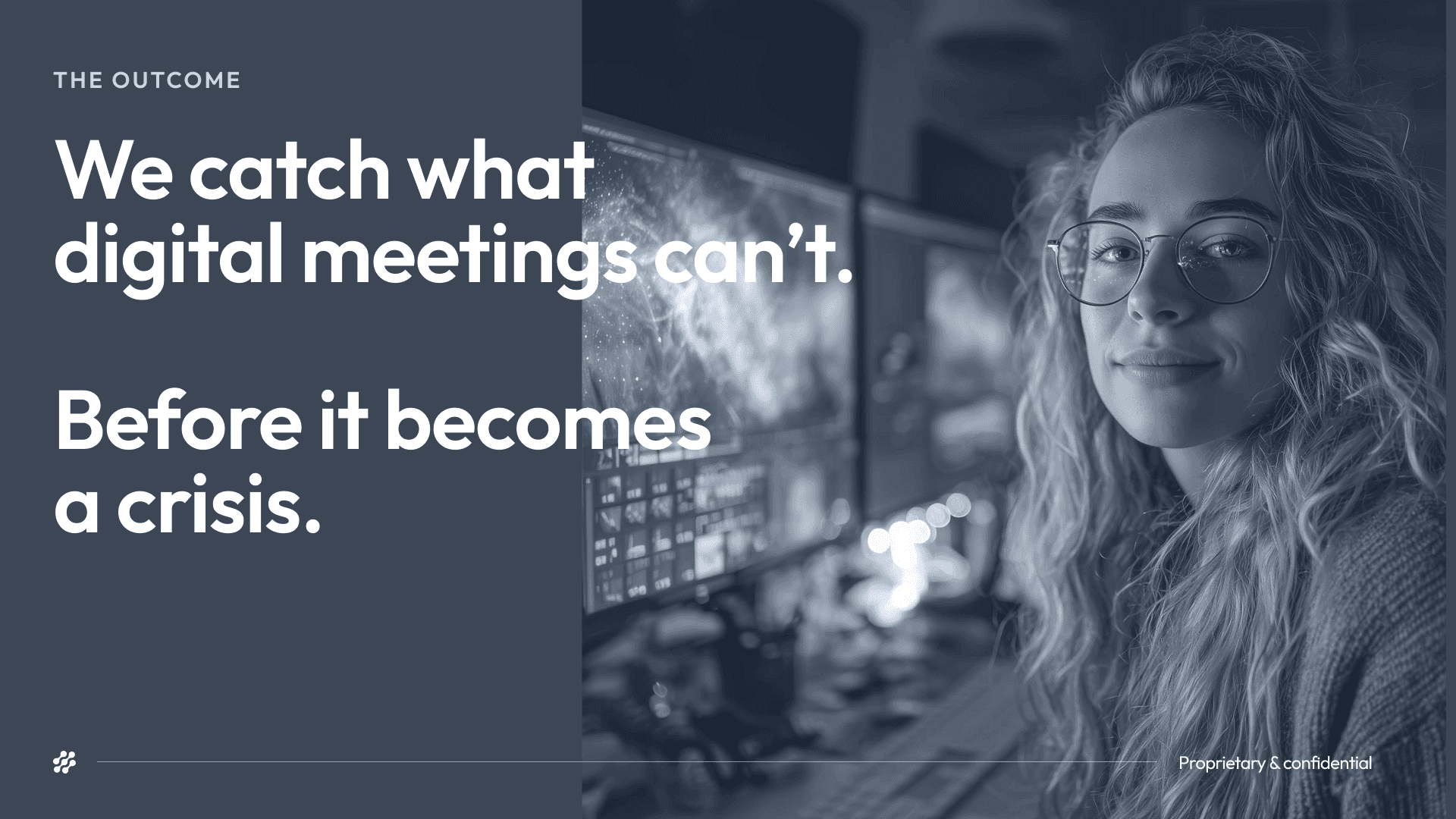
You don’t always hear when someone is struggling.
It hides in digital silence.
It smiles in meetings.
It keeps going… until it can’t.
Modern work created visibility for performance —
but not for pressure, stress or quiet quitting.
You don’t always hear when someone is struggling.
It hides in digital silence.
It smiles in meetings.
It keeps going… until it can’t.
Modern work created visibility for performance —
but not for pressure, stress or quiet quitting.
You don’t always hear when someone is struggling.
It hides in digital silence.
It smiles in meetings.
It keeps going… until it can’t.
Modern work created visibility for performance —
but not for pressure, stress or quiet quitting.
Solution
Solution
Build Moodflo: an AI meeting layer that detects emotional tone and team energy in real time, transforming invisible pressure into actionable mental health insight.
Build Moodflo: an AI meeting layer that detects emotional tone and team energy in real time, transforming invisible pressure into actionable mental health insight.
Build Moodflo: an AI meeting layer that detects emotional tone and team energy in real time, transforming invisible pressure into actionable mental health insight.
Outcome
Outcome
Moodflo moved beyond concept into traction.
• Three enterprise pilots secured (Tesco, MetLife, Soldo)
• Engineer building for google meets/zoom plug in
• 2 x investor interest
• Bootstrapping currently to retain control
What began as a design exploration became an operational product with enterprise credibility - proving the problem is real, the signal is measurable, and the market is ready.
Moodflo moved beyond concept into traction.
• Three enterprise pilots secured (Tesco, MetLife, Soldo)
• Engineer building for google meets/zoom plug in
• 2 x investor interest
• Bootstrapping currently to retain control
What began as a design exploration became an operational product with enterprise credibility - proving the problem is real, the signal is measurable, and the market is ready.
Moodflo moved beyond concept into traction.
• Three enterprise pilots secured (Tesco, MetLife, Soldo)
• Engineer building for google meets/zoom plug in
• 2 x investor interest
• Bootstrapping currently to retain control
What began as a design exploration became an operational product with enterprise credibility - proving the problem is real, the signal is measurable, and the market is ready.
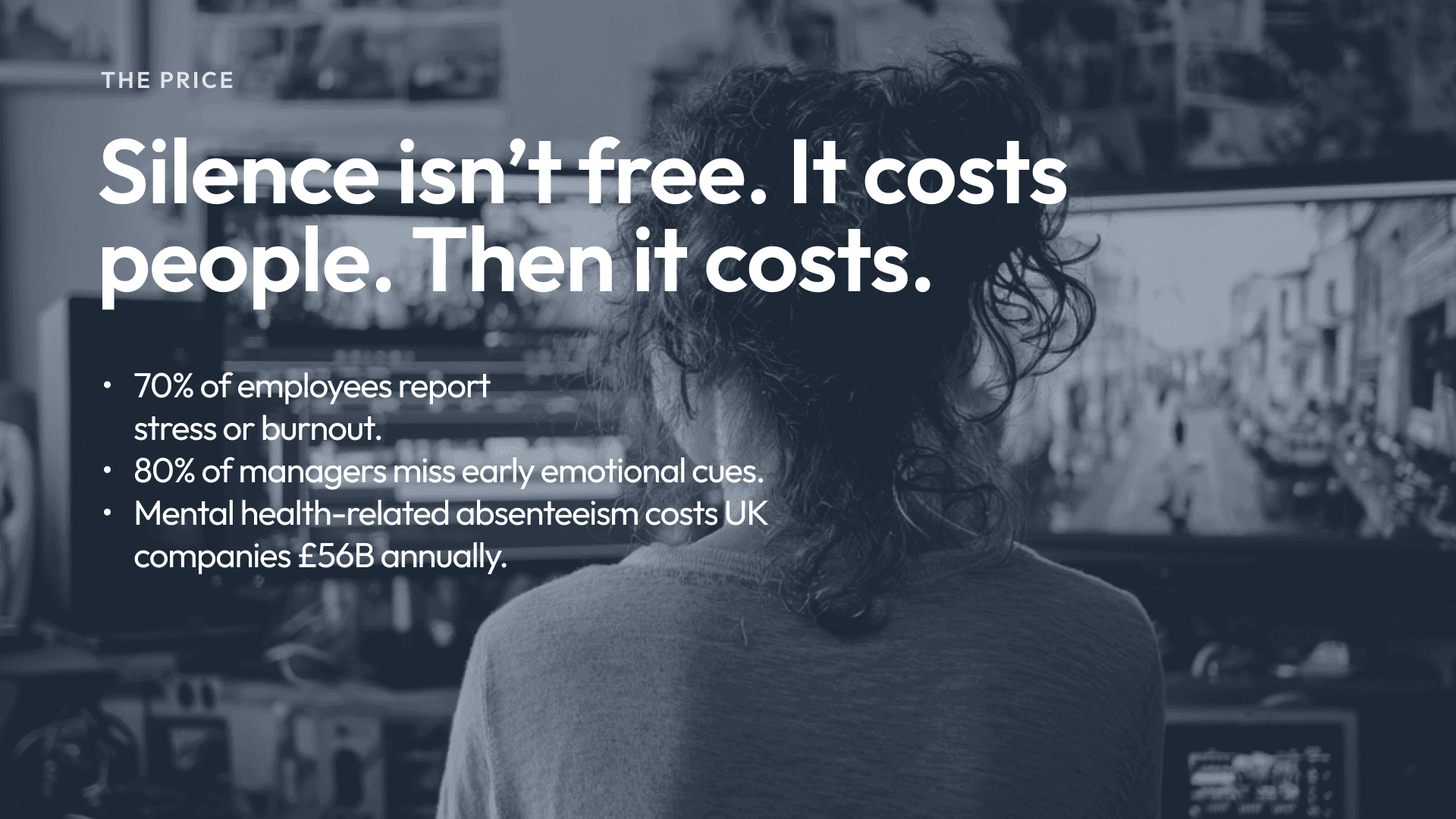
Most meetings hide how people actually feel.
Cameras go off, mics go on mute, and the only time you “see” a problem is when work slips or someone burns out.
Surveys don’t fix that—by the time a form goes out, the moment has passed, emotion has gone and the answers are filtered, polite, or forgotten.
Moodflo targets the live moment: it reads silence, tone and participation as the meeting happens and gives one clear room‑level signal, so leaders can act before pressure become visible.
We worked through real operational scenarios with engineers, to unpack incidents, near-misses, and everyday workflows. These inputs were then sorted, clustered, and debated as a group, allowing recurring themes and pressure points to emerge across different situations.
From this, evaluated the moments carrying the greatest risk or impact, revealing:
Critical incidents are often slowed by delays and miscommunication.
High-risk environments create sustained levels of stress that affect
decision-making.Existing real-time safety protocols are perceived as time-consuming in urgent situations.
Engineers want greater autonomy when responding to incidents in the field.
Gaps in historical and live incident information make it harder to act with confidence.
We worked through real operational scenarios with engineers, to unpack incidents, near-misses, and everyday workflows. These inputs were then sorted, clustered, and debated as a group, allowing recurring themes and pressure points to emerge across different situations.
From this, evaluated the moments carrying the greatest risk or impact, revealing:
Critical incidents are often slowed by delays and miscommunication.
High-risk environments create sustained levels of stress that affect
decision-making.Existing real-time safety protocols are perceived as time-consuming in urgent situations.
Engineers want greater autonomy when responding to incidents in the field.
Gaps in historical and live incident information make it harder to act with confidence.
Phase One * Define
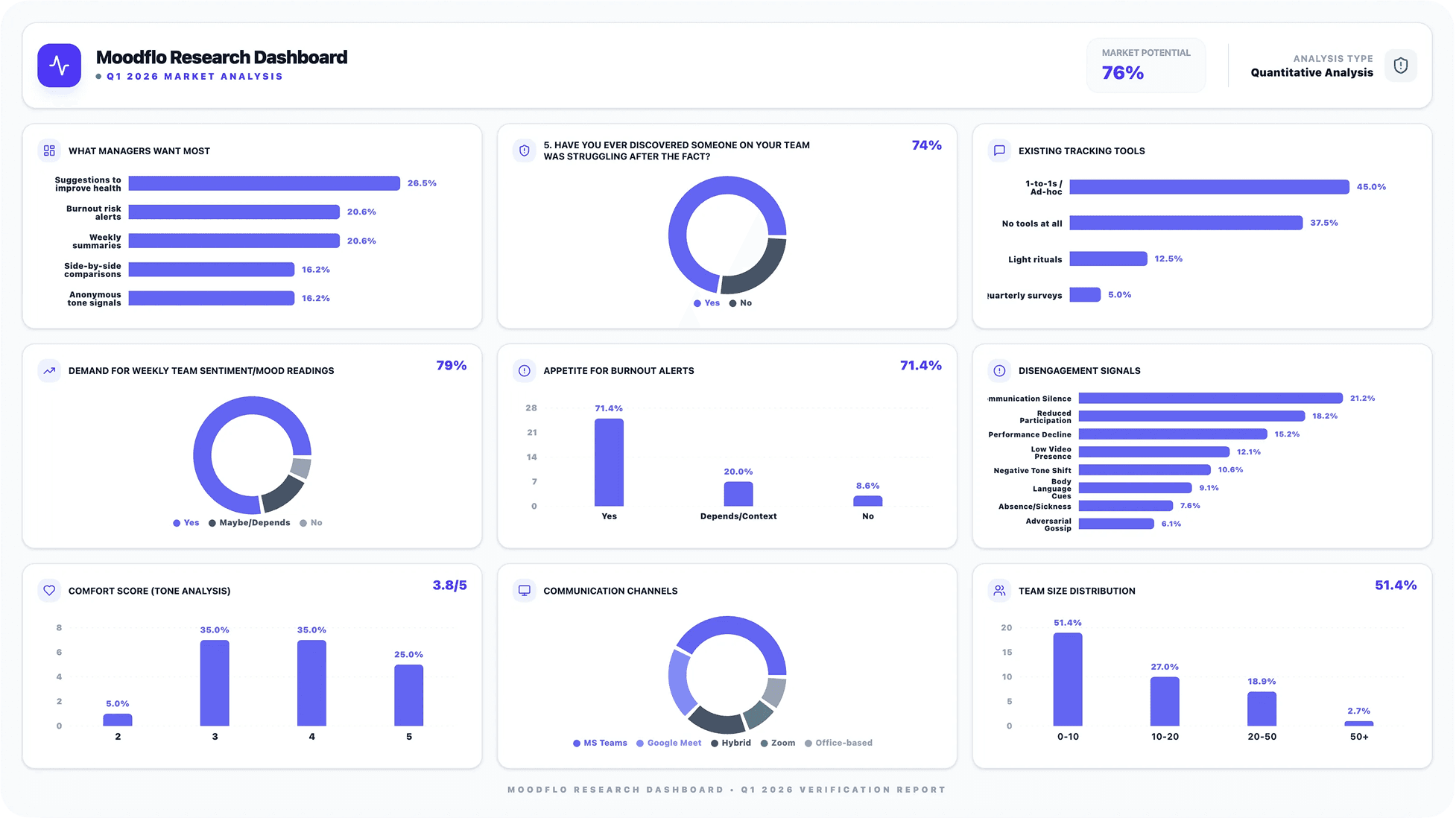
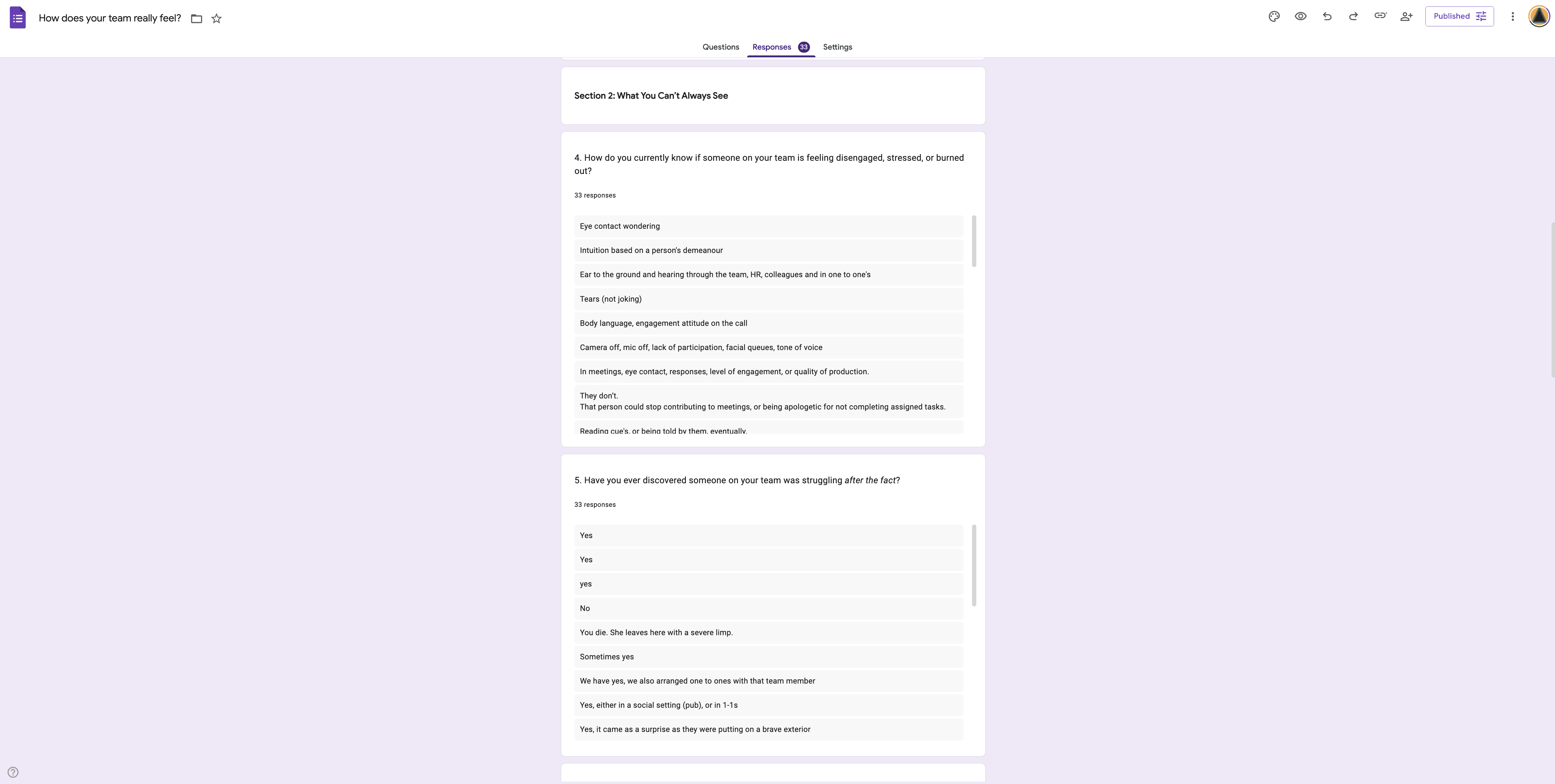
First things first; I needed to know if anyone actually wanted this. I ran a survey to 50 managers and leaders.
We worked through real operational scenarios with engineers, to unpack incidents, near-misses, and everyday workflows. These inputs were then sorted, clustered, and debated as a group, allowing recurring themes and pressure points to emerge across different situations.
From this, evaluated the moments carrying the greatest risk or impact, revealing:
Critical incidents are often slowed by delays and miscommunication.
High-risk environments create sustained levels of stress that affect
decision-making.Existing real-time safety protocols are perceived as time-consuming in urgent situations.
Engineers want greater autonomy when responding to incidents in the field.
Gaps in historical and live incident information make it harder to act with confidence.
We worked through real operational scenarios with engineers, to unpack incidents, near-misses, and everyday workflows. These inputs were then sorted, clustered, and debated as a group, allowing recurring themes and pressure points to emerge across different situations.
From this, evaluated the moments carrying the greatest risk or impact, revealing:
Critical incidents are often slowed by delays and miscommunication.
High-risk environments create sustained levels of stress that affect
decision-making.Existing real-time safety protocols are perceived as time-consuming in urgent situations.
Engineers want greater autonomy when responding to incidents in the field.
Gaps in historical and live incident information make it harder to act with confidence.
Survey Outcome
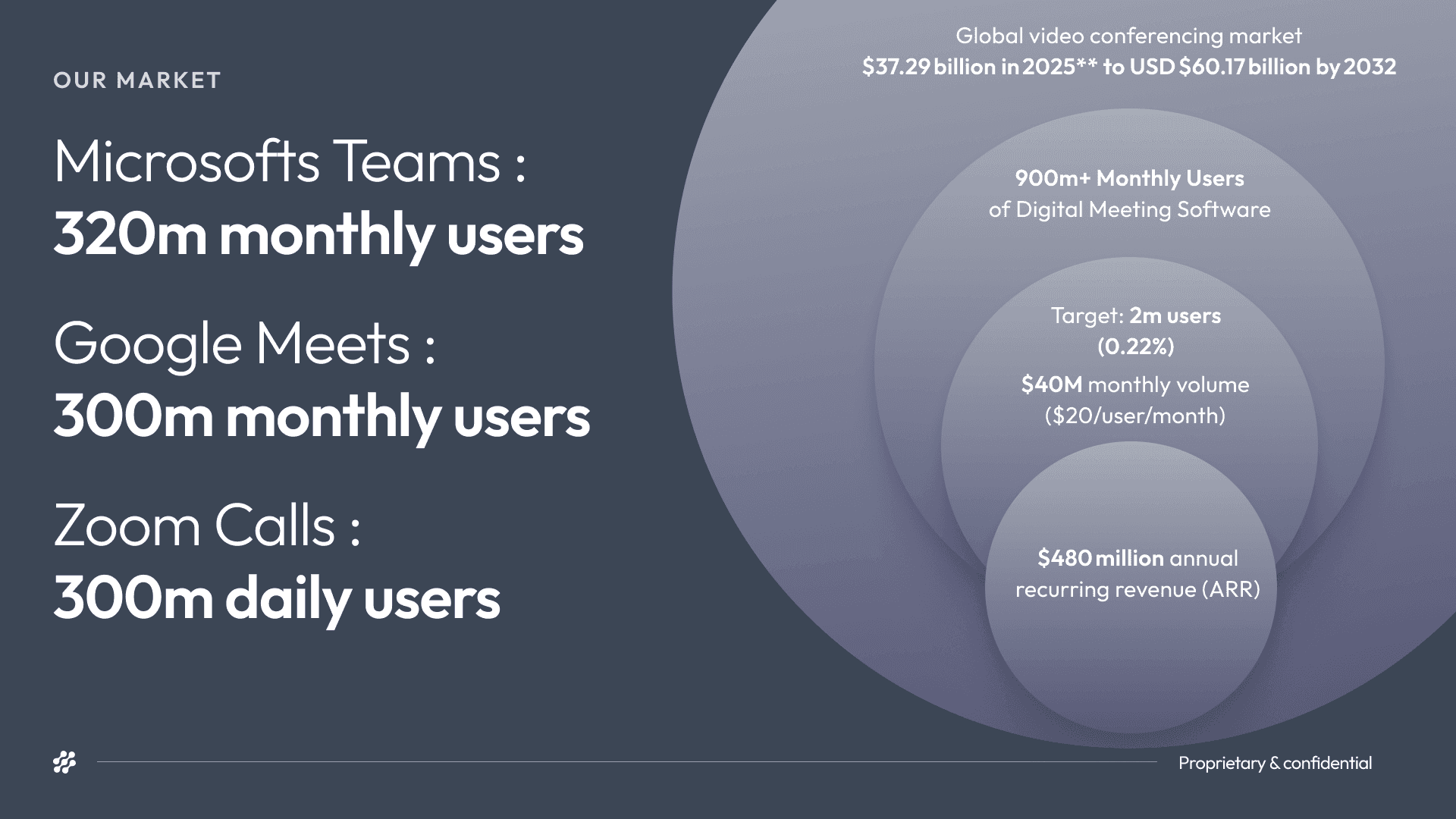
76% Market potential. That was enough to move from “nice idea” to “this could actually change how people run meetings.”
From there I iterated prompts around a single question: “If this really lived inside Zoom or Teams, what would you expect to see?”
Those prompts surfaced raw lists of metrics, states and layouts that I then cut back to what mattered: a handful of room‑level signals that make hidden tension and quiet disengagement visible in the moment.
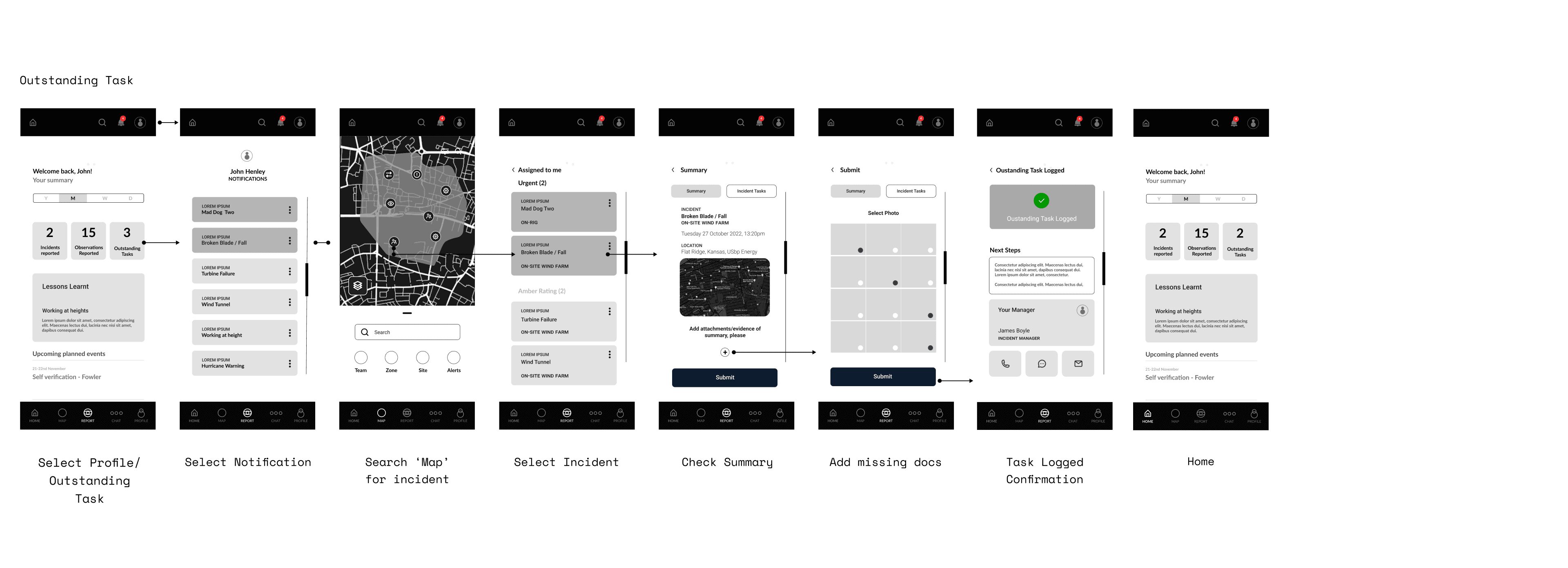
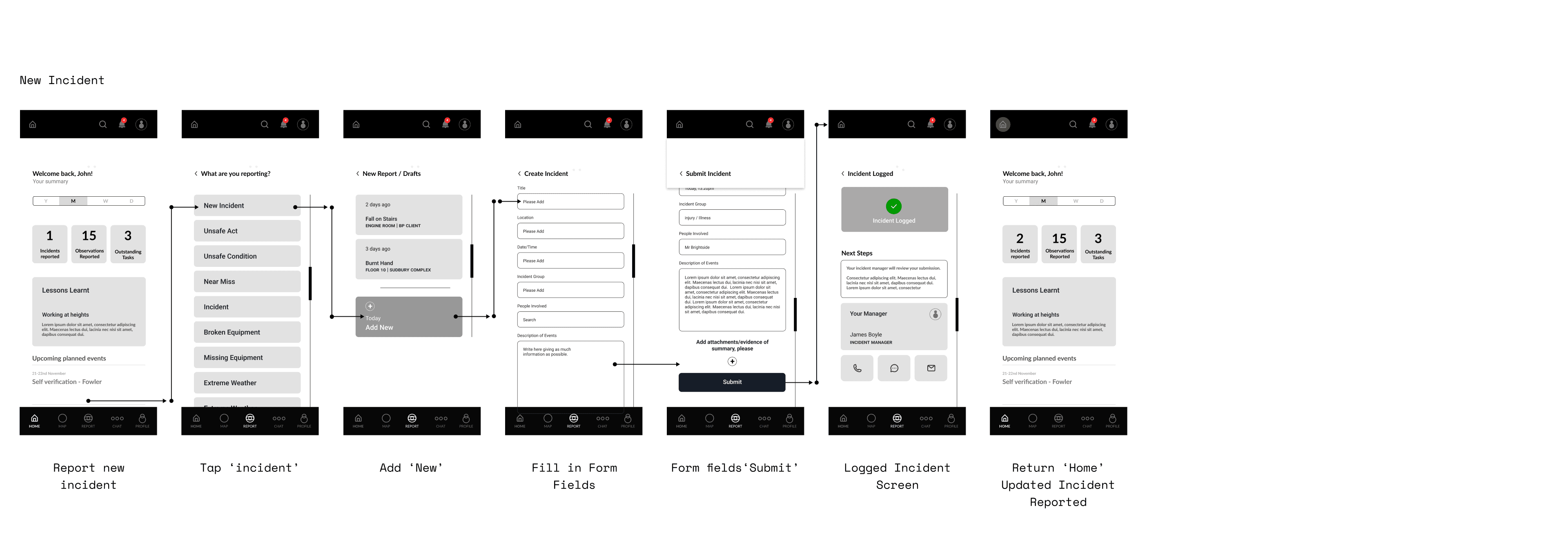
We chose two flows: Incident + Outstanding Tasks.
The 'Incident' flow prioritises speed and clarity, helping engineers capture the right information in that moment, allowing the sharing of potentially life saving information, instantly.
The 'Outstanding tasks' flow supports reflection and follow-up, making it easy for managers to review learnings, complete actions, and share knowledge back into the field.
We chose two flows: Incident + Outstanding Tasks.
The 'Incident' flow prioritises speed and clarity, helping engineers capture the right information in that moment, allowing the sharing of potentially life saving information, instantly.
The 'Outstanding tasks' flow supports reflection and follow-up, making it easy for managers to review learnings, complete actions, and share knowledge back into the field.
Concepts to Clarity
Wireframes
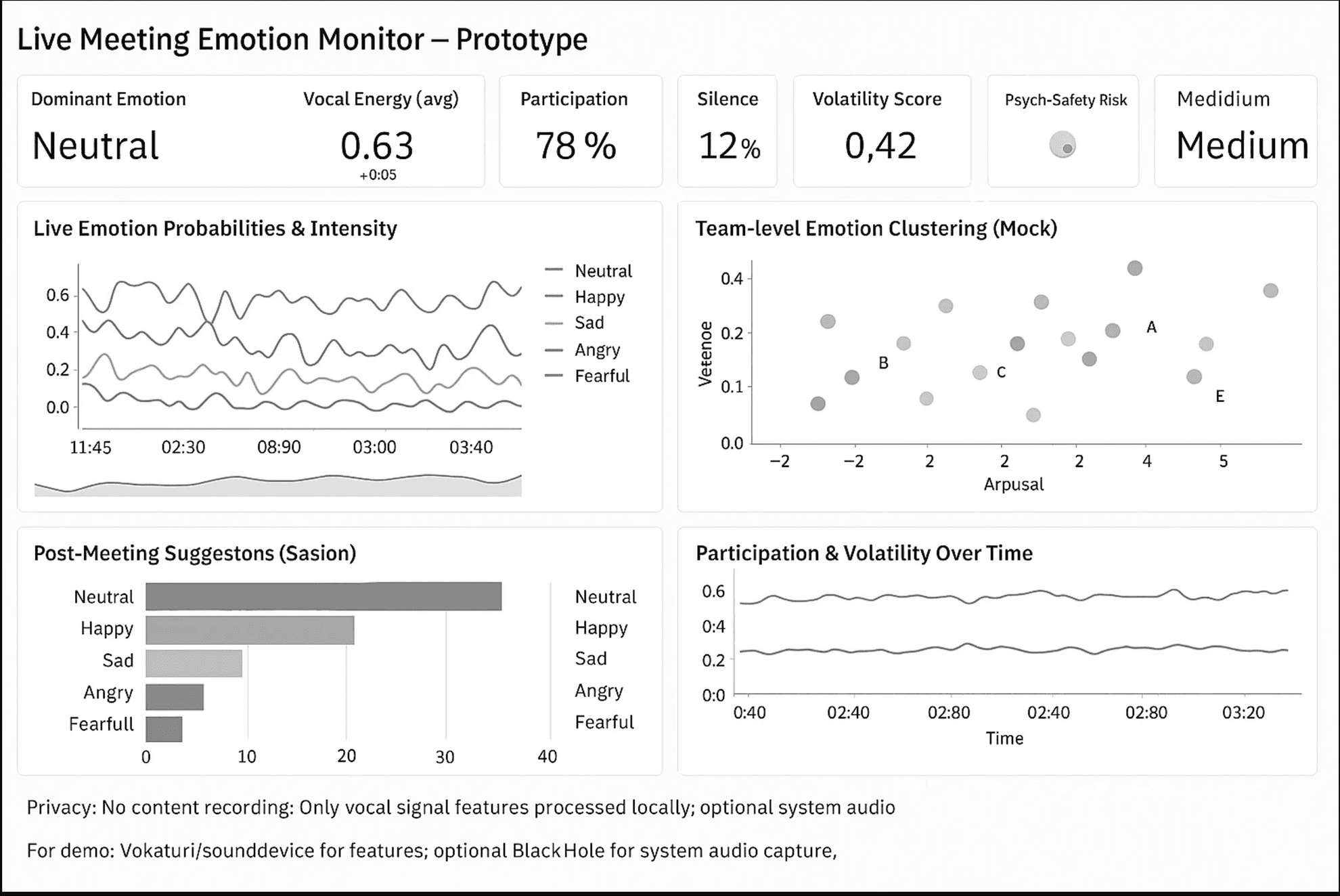
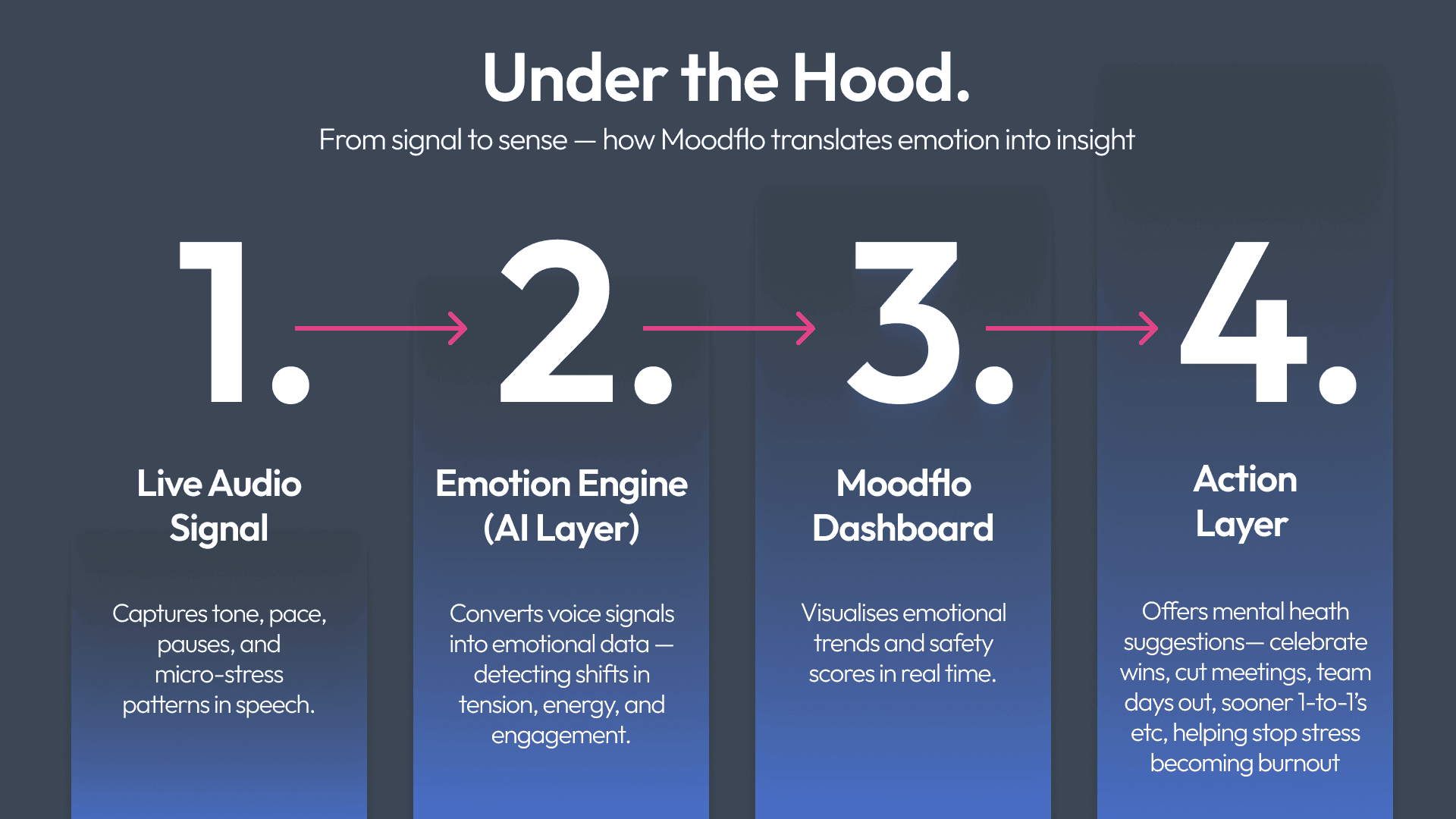
I defined measurable signals already possible with AI: tone, sentiment, silence, participation, vocal energy, mood, volatility, atmosphere, and pauses.
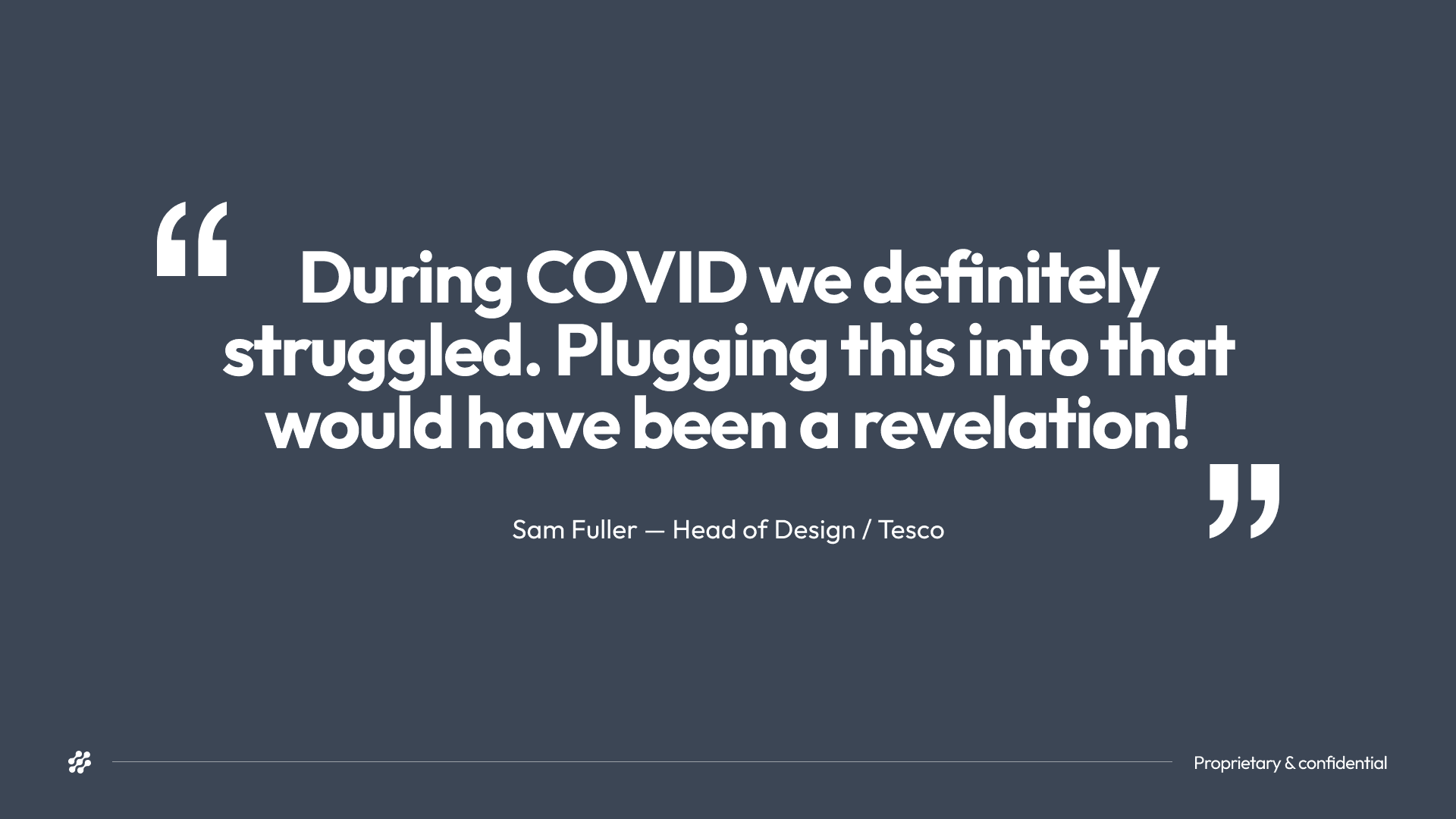
Each signal is tracked during the call, then combined into simple room-level states — no individual scoring, no data wall — just a clear overall signal for the facilitator. I then shared it with three willing participants for testing from tesco, MetLife and Soldo.
“What do these scores actually mean?”
“There’s too much information.”
“Overwhelming.”
The feedback made one thing clear: it wasn’t intuitive. It was confusing.
Wireframes
I defined measurable signals already possible with AI: tone, sentiment, silence, participation, vocal energy, mood, volatility, atmosphere, and pauses.
Each signal is tracked during the call, then combined into simple room-level states — no individual scoring, no data wall — just a clear overall signal for the facilitator. I then shared it with three willing participants for testing from tesco, MetLife and Soldo.
“What do these scores actually mean?”
“There’s too much information.”
“Overwhelming.”
The feedback made one thing clear: it wasn’t intuitive. It was confusing.
Wireframes
I defined measurable signals already possible with AI: tone, sentiment, silence, participation, vocal energy, mood, volatility, atmosphere, and pauses.
Each signal is tracked during the call, then combined into simple room-level states — no individual scoring, no data wall — just a clear overall signal for the facilitator. I then shared it with three willing participants for testing from tesco, MetLife and Soldo.
“What do these scores actually mean?”
“There’s too much information.”
“Overwhelming.”
The feedback made one thing clear: it wasn’t intuitive. It was confusing.
Wireframes
I defined measurable signals already possible with AI: tone, sentiment, silence, participation, vocal energy, mood, volatility, atmosphere, and pauses.
Each signal is tracked during the call, then combined into simple room-level states — no individual scoring, no data wall — just a clear overall signal for the facilitator. I then shared it with three willing participants for testing from tesco, MetLife and Soldo.
“What do these scores actually mean?”
“There’s too much information.”
“Overwhelming.”
The feedback made one thing clear: it wasn’t intuitive. It was confusing.
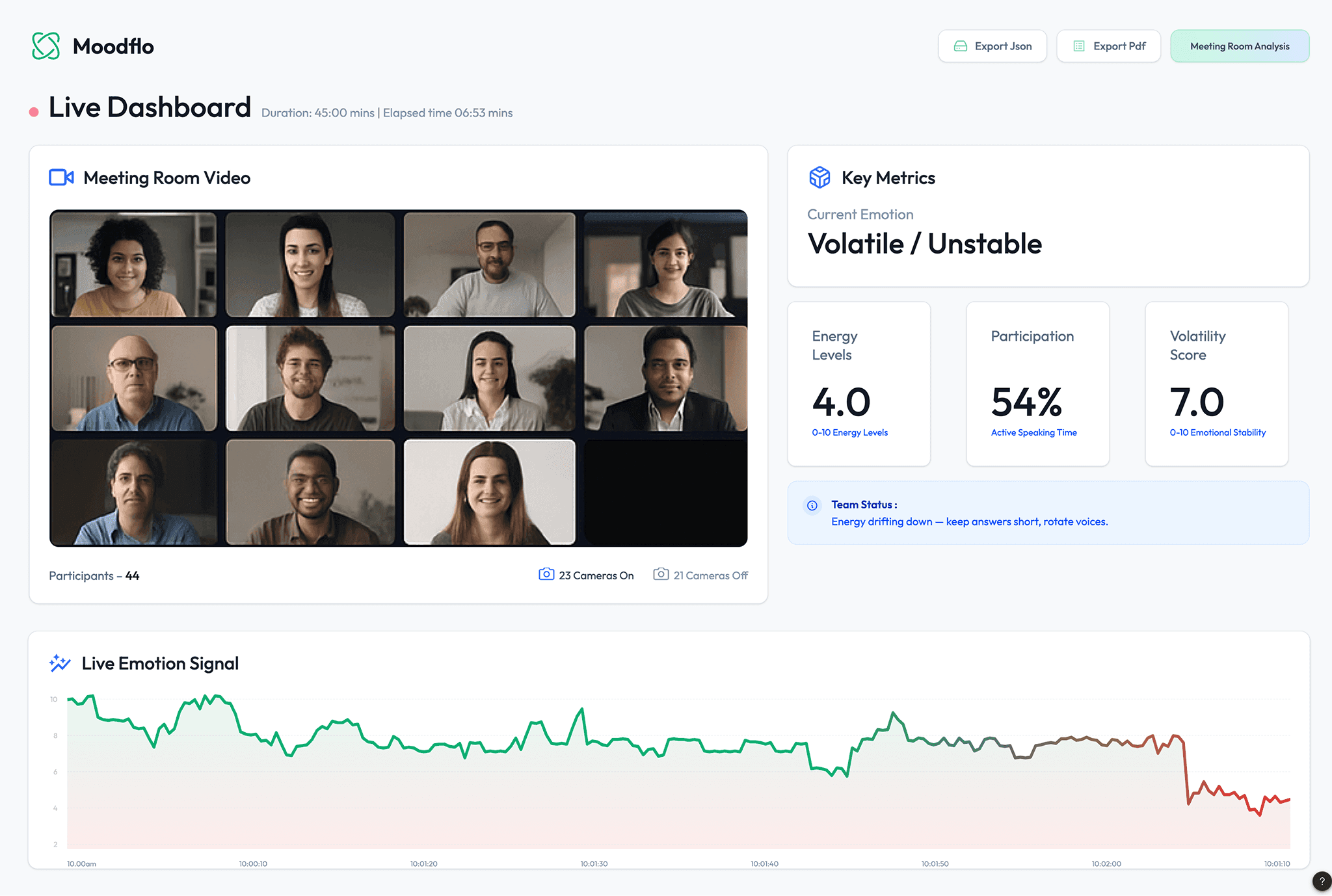
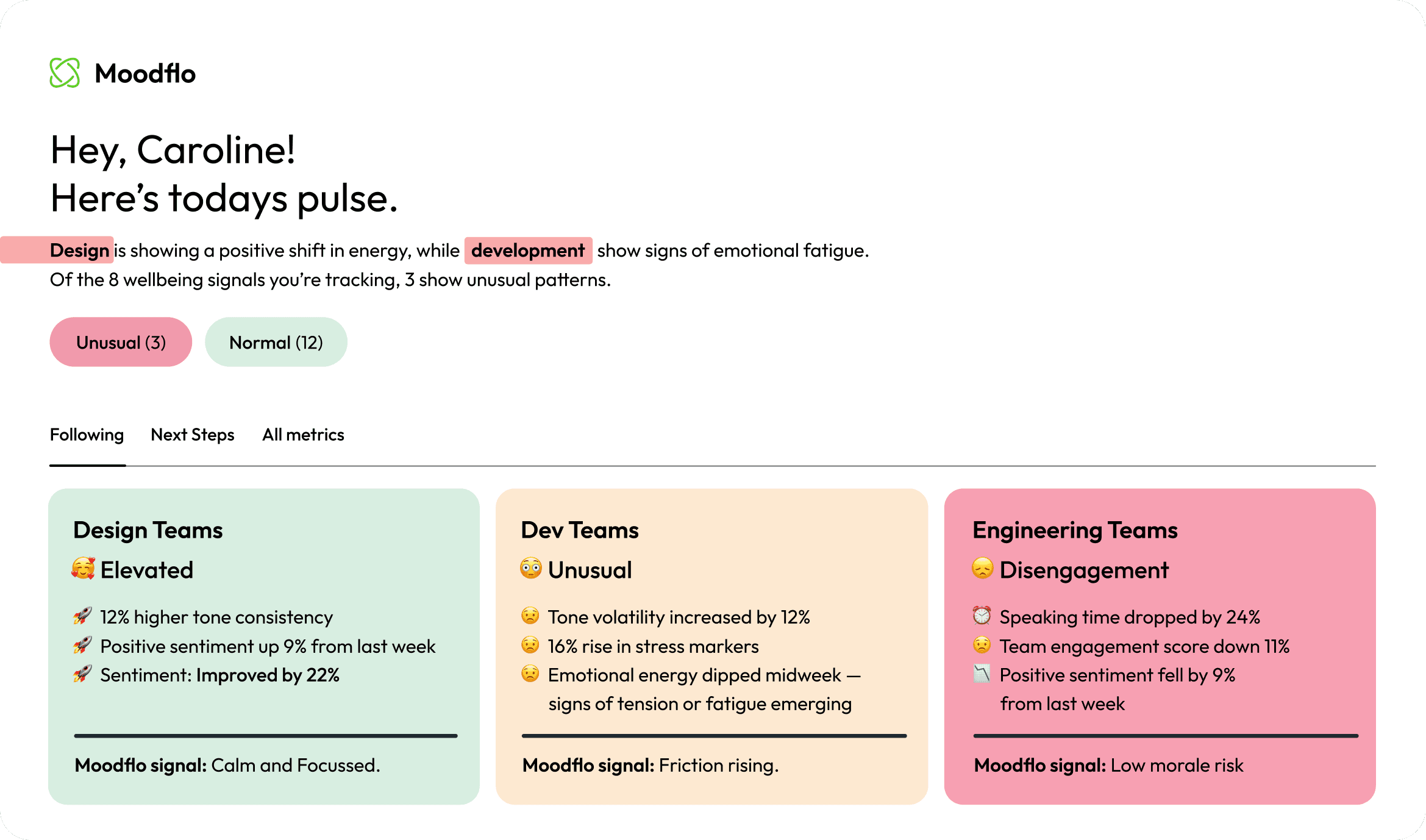
Moving the needle.
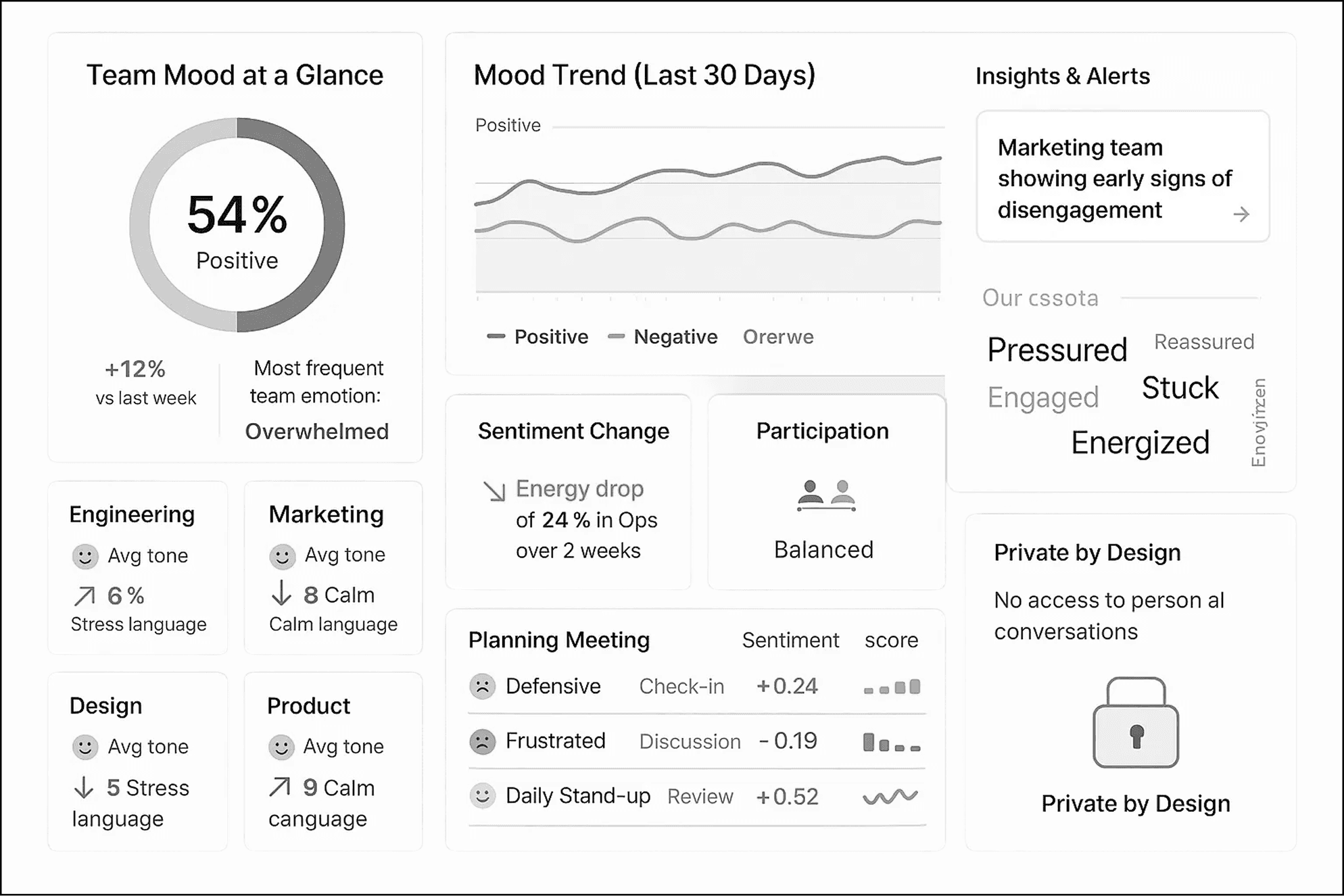
Next, I amped up the visuals to feel more like a real product and reduced the interface to five core panels: Energy, Participation, Volatility, a live emotion graph, and an overall meeting room summary.
I added a Zoom‑style view and a Coaching panel with practical tips for keeping the conversation healthy. I also introduced Export JSON for comparing rooms over time and Export PDF for sharing how the meeting turned out and suggested well-being team tips for the next meeting.
This static version worked much better. The clear winner was the post-meeting summary and tips.
After multiple prototypes in Lovable and parallel tests in Base44 confirmed the newer concept, I brought in a developer to build a functional version that could be tested in the wild.
To help sell the pitch and secure £8m in funding, I needed to establish a clear brand story that made the product feel credible, cohesive, and easy to understand through visual storytelling.
I created a lightweight, satellite design system that was flexible enough to move quickly outside BP’s overloaded core design system, while staying close enough to brand to avoid unnecessary friction.
In the final 4 weeks, the wider design team was invited into weekly show-and-tells to gather feedback, refine the direction, and align with their own emerging visual standards.
To help sell the pitch and secure £8m in funding, I needed to establish a clear brand story that made the product feel credible, cohesive, and easy to understand through visual storytelling.
I created a lightweight, satellite design system that was flexible enough to move quickly outside BP’s overloaded core design system, while staying close enough to brand to avoid unnecessary friction.
In the final 4 weeks, the wider design team was invited into weekly show-and-tells to gather feedback, refine the direction, and align with their own emerging visual standards.
The Live Version
Cost £600.00. Incredible value.
To help sell the pitch and secure £8m in funding, I needed to establish a clear brand story that made the product feel credible, cohesive, and easy to understand through visual storytelling.
I created a lightweight, satellite design system that was flexible enough to move quickly outside BP’s overloaded core design system, while staying close enough to brand to avoid unnecessary friction.
In the final 4 weeks, the wider design team was invited into weekly show-and-tells to gather feedback, refine the direction, and align with their own emerging visual standards.
To help sell the pitch and secure £8m in funding, I needed to establish a clear brand story that made the product feel credible, cohesive, and easy to understand through visual storytelling.
I created a lightweight, satellite design system that was flexible enough to move quickly outside BP’s overloaded core design system, while staying close enough to brand to avoid unnecessary friction.
In the final 4 weeks, the wider design team was invited into weekly show-and-tells to gather feedback, refine the direction, and align with their own emerging visual standards.
Challenges
Building a live plugin that converts surface audio into measurable signals requires considerable backend infrastructure (and cost) and for a testable MVP, i wasnt totally confident with the design and overall feel of the dashboard.
However, I had momentum and i didnt want to put the brakes on. Quickly another solution presented itself.
To help sell the pitch and secure £8m in funding, I needed to establish a clear brand story that made the product feel credible, cohesive, and easy to understand through visual storytelling.
I created a lightweight, satellite design system that was flexible enough to move quickly outside BP’s overloaded core design system, while staying close enough to brand to avoid unnecessary friction.
In the final 4 weeks, the wider design team was invited into weekly show-and-tells to gather feedback, refine the direction, and align with their own emerging visual standards.
To help sell the pitch and secure £8m in funding, I needed to establish a clear brand story that made the product feel credible, cohesive, and easy to understand through visual storytelling.
I created a lightweight, satellite design system that was flexible enough to move quickly outside BP’s overloaded core design system, while staying close enough to brand to avoid unnecessary friction.
In the final 4 weeks, the wider design team was invited into weekly show-and-tells to gather feedback, refine the direction, and align with their own emerging visual standards.
Workaround
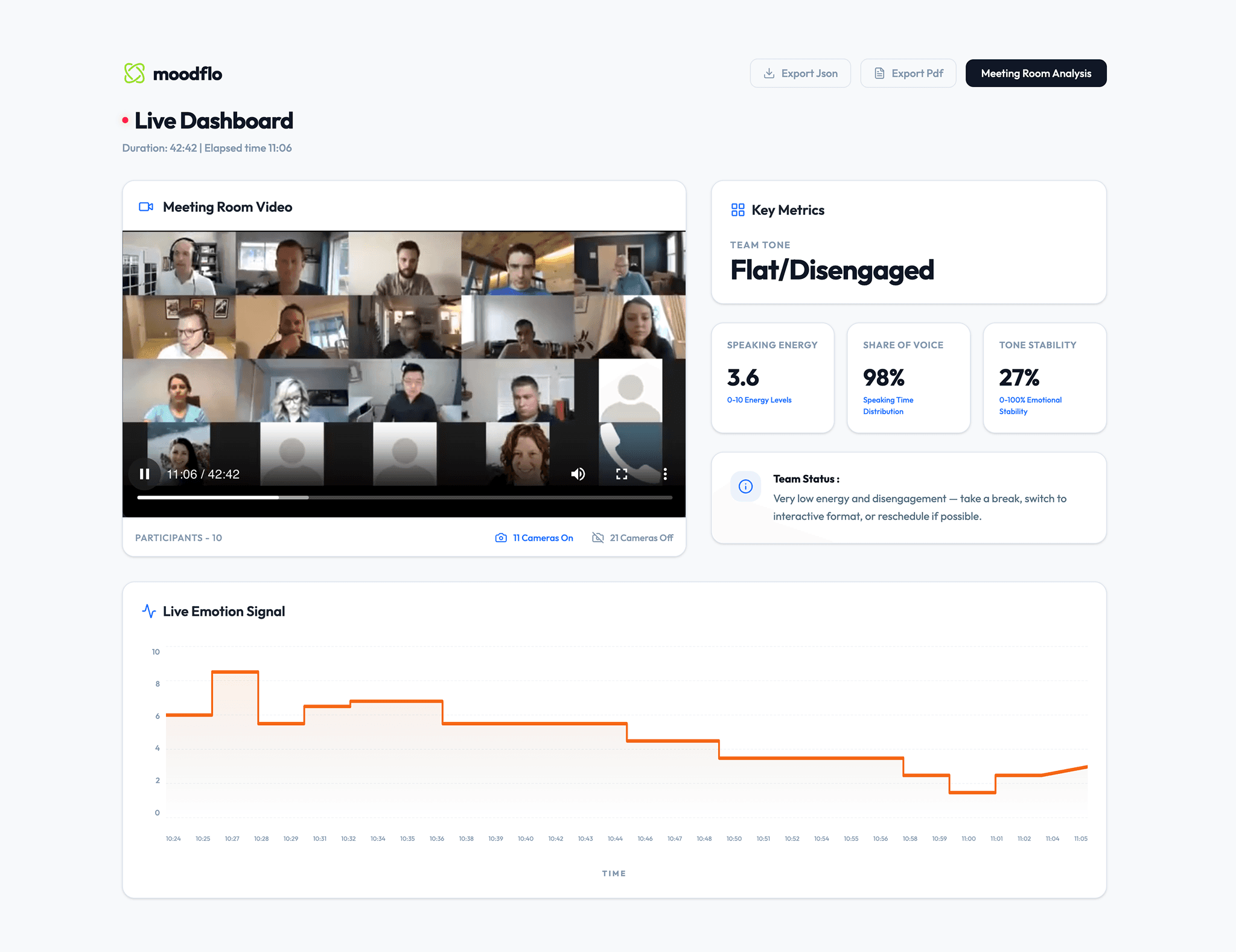
Instead of relying on live call input, I pivoted to uploaded pre-recorded meeting content. The experience could still pull data except this time it was from a video and not 'live'.
I created the 'live' environment locally with terminal which saved on backend ai infrastructure and uploaded a video into Moodflo.
It worked perfectly but it felt slow. The processing intervals could be adjusted to seconds / minutes, yet neither option felt right.
Visually, it lacked energy. The shifts in room tone weren’t rewarding to watch, and the interface didn’t create any meaningful sense of movement or feedback.
After more user testing, feedback was confident but the design was lacking/needed improvement. One comment was it 'dominated' rather than augmented the meeting room experience.
This put me in a different place completed. After a few hours of back and forth, it fell into place.
To help sell the pitch and secure £8m in funding, I needed to establish a clear brand story that made the product feel credible, cohesive, and easy to understand through visual storytelling.
I created a lightweight, satellite design system that was flexible enough to move quickly outside BP’s overloaded core design system, while staying close enough to brand to avoid unnecessary friction.
In the final 4 weeks, the wider design team was invited into weekly show-and-tells to gather feedback, refine the direction, and align with their own emerging visual standards.
To help sell the pitch and secure £8m in funding, I needed to establish a clear brand story that made the product feel credible, cohesive, and easy to understand through visual storytelling.
I created a lightweight, satellite design system that was flexible enough to move quickly outside BP’s overloaded core design system, while staying close enough to brand to avoid unnecessary friction.
In the final 4 weeks, the wider design team was invited into weekly show-and-tells to gather feedback, refine the direction, and align with their own emerging visual standards.
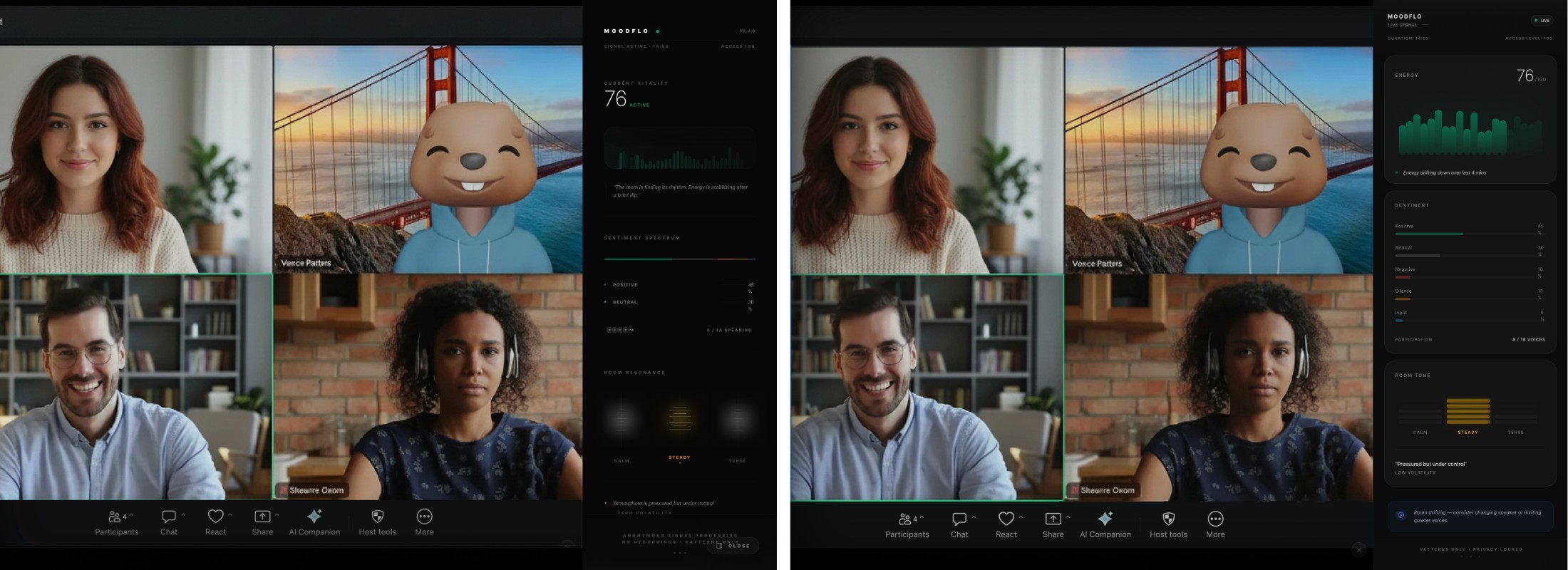
Smaller interface, great impact
The slide-tray approach felt right from the very start. It keeps the meeting central while still allowing me to show the key panels: energy over time, sentiment balance, and room tone/participation and flow suggestions.
These compact panels give quick cues about overall engagement and mood without covering faces or shared content, reducing distraction compared with the full‑screen analytics view. I still had all the functionality but now real estate had been reduced to 20% view with a tab only view should you wish to see the whole room.
I created several views with figma-make. This allowed me to build interaction and motion into the experience which further expanded the design.
After a few hours of prompting and tweaking, I had my MVP:
https://www.figma.com/make/ZA4R1cCBbENlhaPPvgHg5U/Right-Hand-Slide-Out-Drawer-UI?t=sIQSFxBZWcPApNB3-1
To help sell the pitch and secure £8m in funding, I needed to establish a clear brand story that made the product feel credible, cohesive, and easy to understand through visual storytelling.
I created a lightweight, satellite design system that was flexible enough to move quickly outside BP’s overloaded core design system, while staying close enough to brand to avoid unnecessary friction.
In the final 4 weeks, the wider design team was invited into weekly show-and-tells to gather feedback, refine the direction, and align with their own emerging visual standards.
To help sell the pitch and secure £8m in funding, I needed to establish a clear brand story that made the product feel credible, cohesive, and easy to understand through visual storytelling.
I created a lightweight, satellite design system that was flexible enough to move quickly outside BP’s overloaded core design system, while staying close enough to brand to avoid unnecessary friction.
In the final 4 weeks, the wider design team was invited into weekly show-and-tells to gather feedback, refine the direction, and align with their own emerging visual standards.
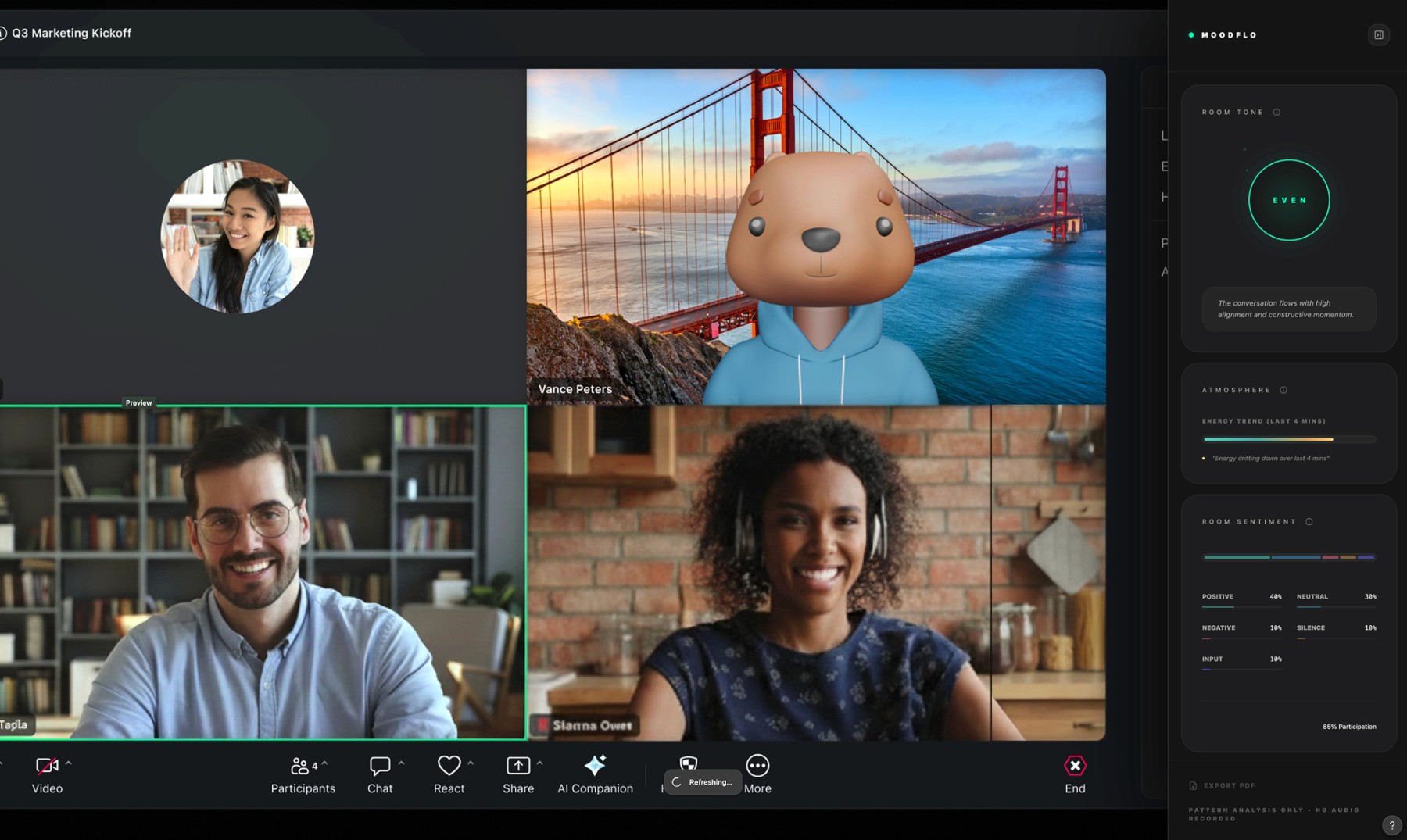
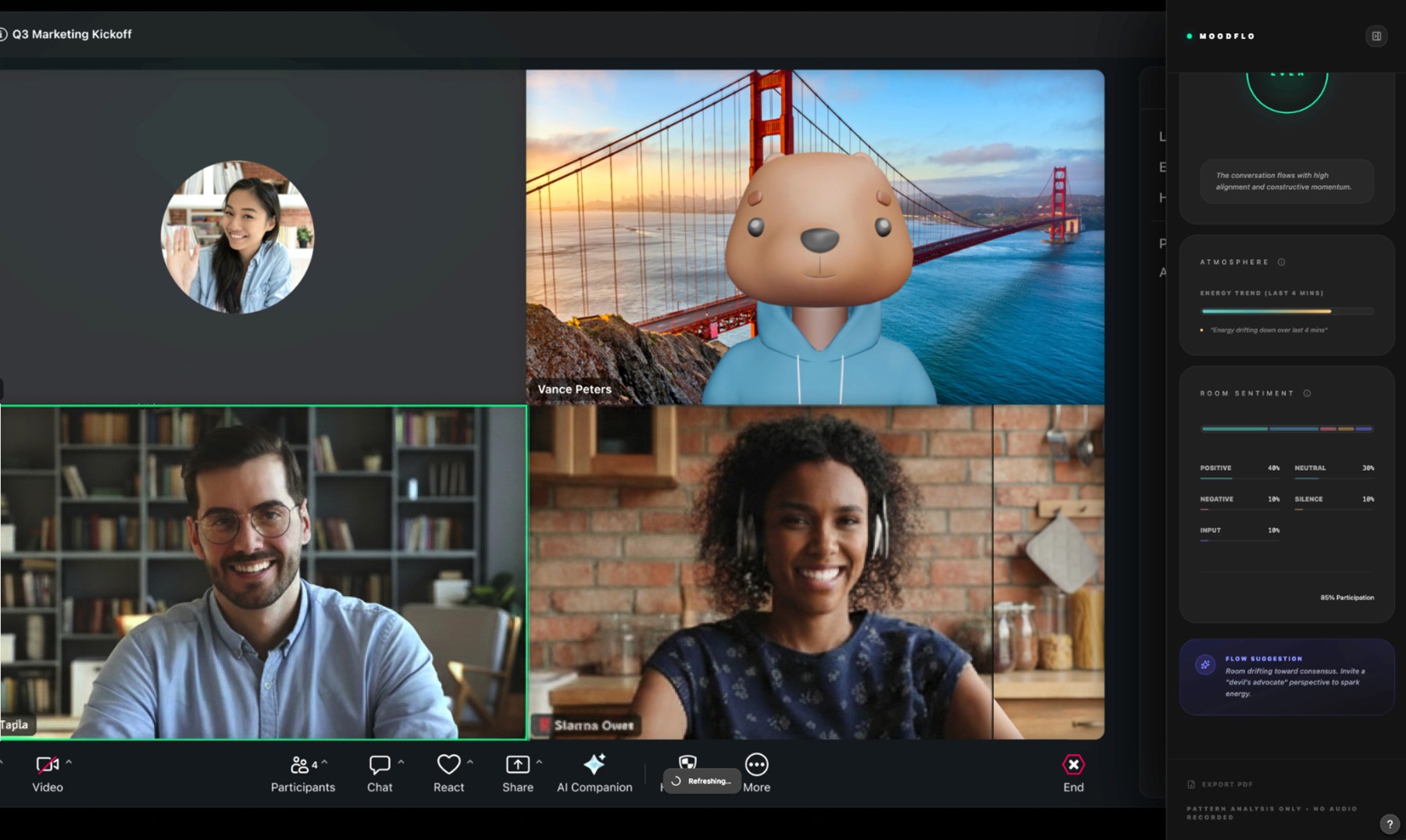
How it works
Room Tone:
Combines recent sentiment, vocal energy and silence into a single word that best describes the overall emotional state of the room.
Atmosphere
Tracks changes in speaking pace, pauses, volume and turn‑taking to show whether energy is drifting up, down or holding steady.
Sentiment
Analyses the transcript and talk time to show the percentage of positive, neutral, negative speech, silence and how widely contributions are shared.
Participation
Counts how many people actually spoke in the recent window to give a simple percentage of active participants in the meeting.
Flow Suggestions
Watches how the conversation is moving and offers simple prompts to keep it balanced, focused and flowing.
To help sell the pitch and secure £8m in funding, I needed to establish a clear brand story that made the product feel credible, cohesive, and easy to understand through visual storytelling.
I created a lightweight, satellite design system that was flexible enough to move quickly outside BP’s overloaded core design system, while staying close enough to brand to avoid unnecessary friction.
In the final 4 weeks, the wider design team was invited into weekly show-and-tells to gather feedback, refine the direction, and align with their own emerging visual standards.
To help sell the pitch and secure £8m in funding, I needed to establish a clear brand story that made the product feel credible, cohesive, and easy to understand through visual storytelling.
I created a lightweight, satellite design system that was flexible enough to move quickly outside BP’s overloaded core design system, while staying close enough to brand to avoid unnecessary friction.
In the final 4 weeks, the wider design team was invited into weekly show-and-tells to gather feedback, refine the direction, and align with their own emerging visual standards.
(2014-26)
Let’s talk.
Tell me about your project-whether it’s a app, website, product creation or a build with Ai.
Quick response.
If you’re ready to create and collaborate, I’d love to hear from you.

Lead Product Designer
Moodflo
Michael Ruocco
Let’s talk.
Tell me about your project-whether it’s a app, website, product creation or a build with Ai.
Quick response.
If you’re ready to create and collaborate, I’d love to hear from you.
Lead Product Designer
Moodflo
Michael Ruocco